Looking after your fingers
Pulleys, tweaks and the warning signs — how to keep the most injury-prone part of a climber healthy.
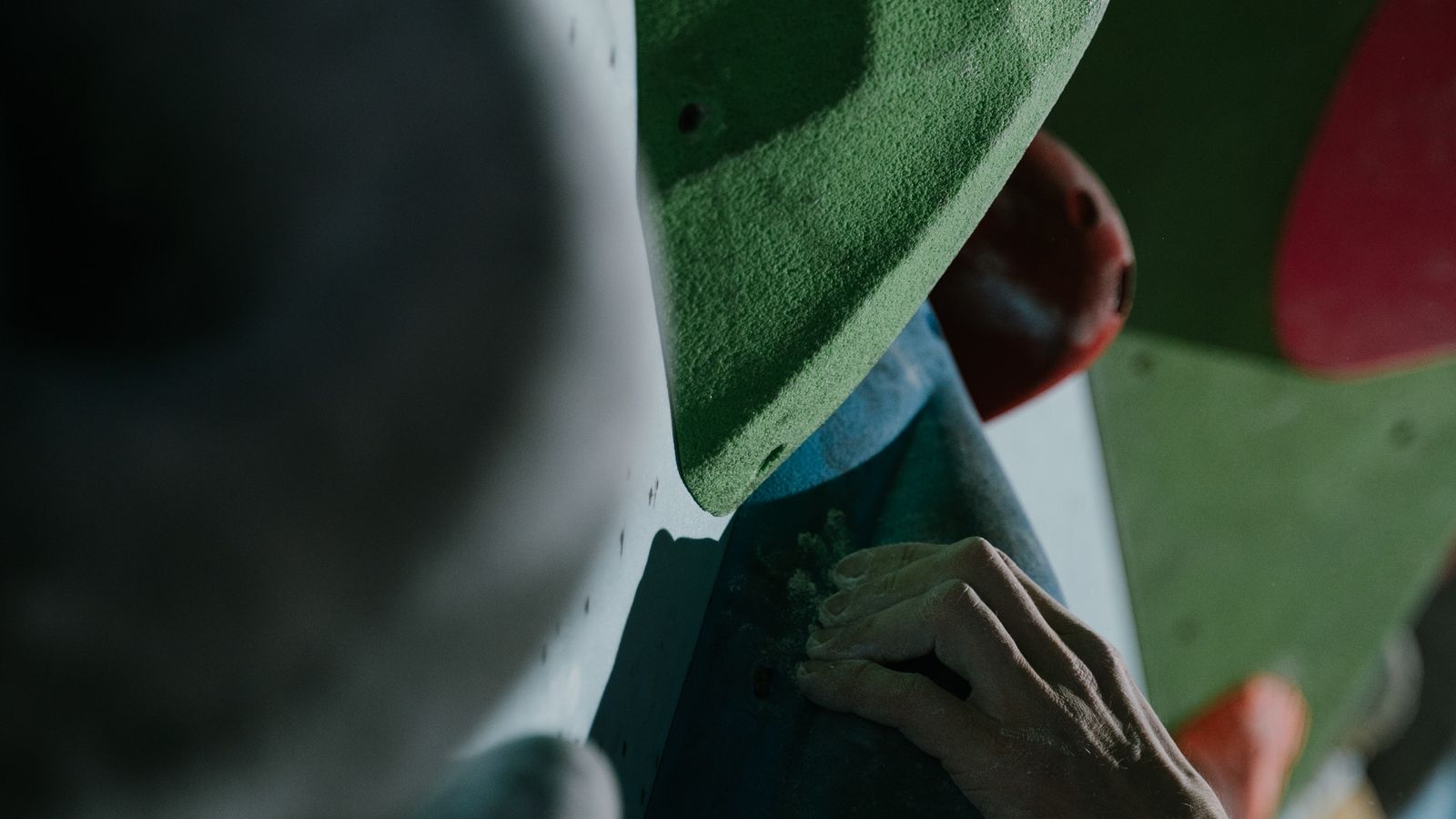
Ask a room of climbers about injuries and the conversation turns to fingers within a minute. They are the part that takes the most load, adapts the slowest, and gives the least warning before something gives. Looking after them is not glamorous, but it is the difference between climbing for decades and spending half your seasons taped up and frustrated.
Why fingers are the weak link
When you pull on a small crimp, the tendons that flex your fingers run through a series of pulleys — bands of tissue that hold them against the bone. The one that fails most often is the A2 pulley, at the base of the finger. A full-crimp grip, where the fingers are bent hard and the thumb wraps over, loads those pulleys far more than an open-hand grip. It is also the strongest position, which is exactly why people get hurt reaching for it before their tendons are ready.
The core problem is timing. Your muscles get strong in weeks. Your fingers take months to years. Most finger injuries are not bad luck — they are a strong body asking weak tendons to do something they have not yet adapted to.
Know the warning signs
A pulley injury does not always announce itself with a famous "pop". Often it starts as a niggle that you talk yourself out of. Learn to take these seriously:
- Soreness or stiffness at the base of a finger that lingers after sessions.
- A specific finger that aches on crimps but feels fine open-handed.
- Tenderness or slight swelling along the front of a finger.
- Any sharp pain mid-move, especially on a small hold.
If you feel a sudden sharp pain or hear a pop, stop climbing for the day. Pushing through finger pain is how a fortnight off becomes six months off. When in doubt, rest it and see a physio who knows climbers — guessing with fingers is a poor bet.
Train them, but slowly
The way to bullet-proof fingers is to load them gradually and consistently, not to avoid load altogether. A hangboard, used sensibly, is one of the best tools for this once you have a couple of years of climbing behind you. The rules are simple and worth respecting: warm up thoroughly, train on edges that feel hard but not desperate, keep sessions short, and progress over months rather than weeks.
If you are newer than that, you almost certainly do not need a hangboard. Your fingers will get plenty strong just from climbing, and the time you would spend hanging is better spent learning to move well. Patience here is not caution for its own sake — it is the fastest route to fingers that can take real load later.
Warm up and recover properly
Cold fingers are stiff fingers, and stiff fingers tear. Never start a session by yanking on small crimps. Spend ten minutes getting blood into the hands — easy traversing, big holds, some gentle finger rolls and band work — before you touch anything sharp. The first hard crimp of the day should come after you are warm, not before.
Recovery matters just as much. Fingers heal between sessions, so back-to-back hard crimping days are asking for trouble. Space your hard finger work out, eat and sleep well, and pay attention to the niggles that show up the morning after. Keeping a quick note of any tweaks, which finger, and what brought it on helps you spot a pattern before it becomes a real injury.
Look after your fingers and they will carry you a long way. Rush them and they will remind you, slowly and expensively, that they were always the weak link.
Header photo by cottonbro studio
More from the blog
 Mindset & community
Breaking through a climbing plateau
Why progress stalls, and the changes — volume, technique, rest — that get it moving again.
 Mindset & community
Learning from climbing on YouTube
How to use climbing films and channels to learn movement — and watch with a critical eye.
 Mindset & community
What we can learn from how the pros train
The habits elite climbers share — rest, reading, deliberate practice — that any climber can borrow.