Looking after your climbing gear
Washing ropes, storing slings, checking for wear — simple care that keeps kit safe for longer.
Why care is a safety thing, not housekeeping
Most climbing gear fails slowly and quietly long before it fails dramatically. A rope does not snap one day out of nowhere. It gets ground full of grit, the sheath frays at a worn spot, and the core stiffens, and you ignored all of it because the rope still looked roughly fine. Looking after your kit is mostly about noticing that slow decline early enough to retire a piece on your terms rather than mid-fall.
The good news is that the routine is short, cheap and mostly common sense.
Ropes
Grit is the enemy. Tiny rock particles work into the rope and saw at the fibres from the inside every time it runs through a device. Keep your rope on a tarp or rope bag at the crag so it never sits in the dirt, and it will outlast a rope left to drag through the mud by years.
When it gets visibly dirty or starts feeling stiff, wash it. Use cool or lukewarm water, either by hand in a bath or on a gentle cycle, with a proper rope wash or a tiny amount of mild soap and no fabric softener or harsh detergent. Rinse it well, then dry it loosely coiled out of direct sunlight, because UV degrades the fibres over time.
Run the whole rope through your hands now and then. You are feeling for flat spots, soft mushy sections, lumps where the core may be damaged, and worn or fuzzy patches in the sheath. A small amount of surface fuzz is normal wear. A spot where you can feel the core through the sheath, or a flat squashed section, means retire it.
Slings, harness and soft goods
Anything textile is vulnerable to the same enemies: abrasion, UV and chemicals. Slings and quickdraw dogbones in particular fade and stiffen in sunlight, so store them in a bag in the dark rather than hanging in a sunny window or the back of a hot car all summer.
Inspect soft goods for:
- Cuts, fraying or fuzzy worn areas, especially where a sling runs over an edge
- Faded colour, which can hint at sun damage
- Stitching that is pulled, abraded or coming undone
- Anything stiff, melted-looking or chemically contaminated
Keep all of it well away from acids, solvents, petrol and battery fluid, because these can wreck nylon invisibly with no outward sign.
Metal gear and storage
Carabiners, cams and belay devices are tougher, but they still need attention. Rinse salt and grit off, and if a carabiner gate or a cam trigger sticks, clean it and add a touch of dry lubricant, then wipe off the excess so it does not collect grime. Check gates snap shut crisply and that cam lobes spring back fully. Retire anything with sharp burrs, deep grooves worn by the rope, or a cracked frame.
Store everything dry. Damp kit in a sealed bag is how rust and mould start.
A handful of simple rules carry most of it. Keep gear off the ground and out of the sun, wash ropes gently when they need it, inspect before and after trips, and retire anything you are not sure about, because the cost of a new sling is nothing next to what it protects. Keeping a record of when each rope, harness and sling first came into use, and roughly how hard it has been worked, takes the guesswork out of knowing when its time is up.
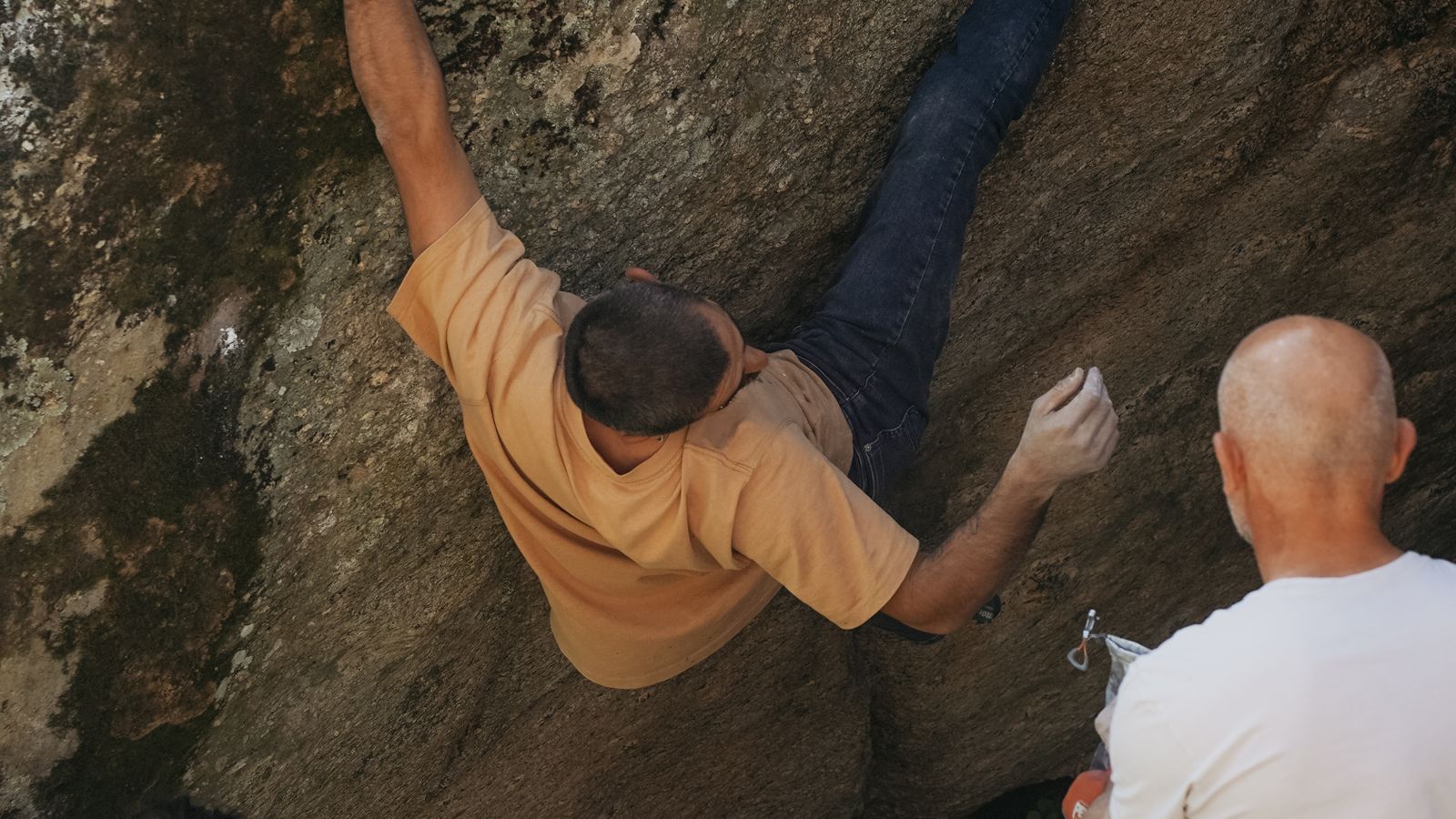
Header photo by Cansu Hangül
More from the blog
 Gear
GearBelay devices explained
Tubes, assisted-braking and the differences that matter when you are holding a fall.
 Gear
GearChoosing a crash pad for bouldering
Single or double fold, big or small — how to pick a pad and how to place it well.
 Gear
GearWhat goes in a trad rack
A gentle introduction to the protection trad climbers carry, without the jargon overload.