Footwork lessons from the best climbers
Watch the strongest climbers and it is the feet, not the arms, that stand out. What to copy.

Stand at the bottom of a climbing wall and watch the best person in the room. The thing that catches your eye is rarely a huge lock-off or a wild dyno. It is how quiet and precise the feet are. Strong climbers move their feet deliberately, trust them completely, and let the legs do the work the arms cannot. That is the part worth stealing.
Quiet feet, every time
A useful test of your own footwork is sound. If your shoes scrape, slip and slap against the wall, you are placing them with your eyes shut and adjusting on contact. The best climbers place a foot once, precisely, on the spot they already chose, and leave it there.
Practise this on easy ground. Pick a traverse two or three grades below your limit and climb it with one rule: every foot lands silently and does not readjust. It feels slow and fussy at first. After a few sessions it becomes how you move without thinking, and on hard routes that precision is what keeps you on the wall when the holds get small.
Look at the foot until it lands
Beginners look at a foothold, then look up at the next handhold while their foot is still travelling. The foot ends up roughly in the right area and slips at the worst moment. Strong climbers watch the foot all the way onto the hold and only break the gaze once it is set.
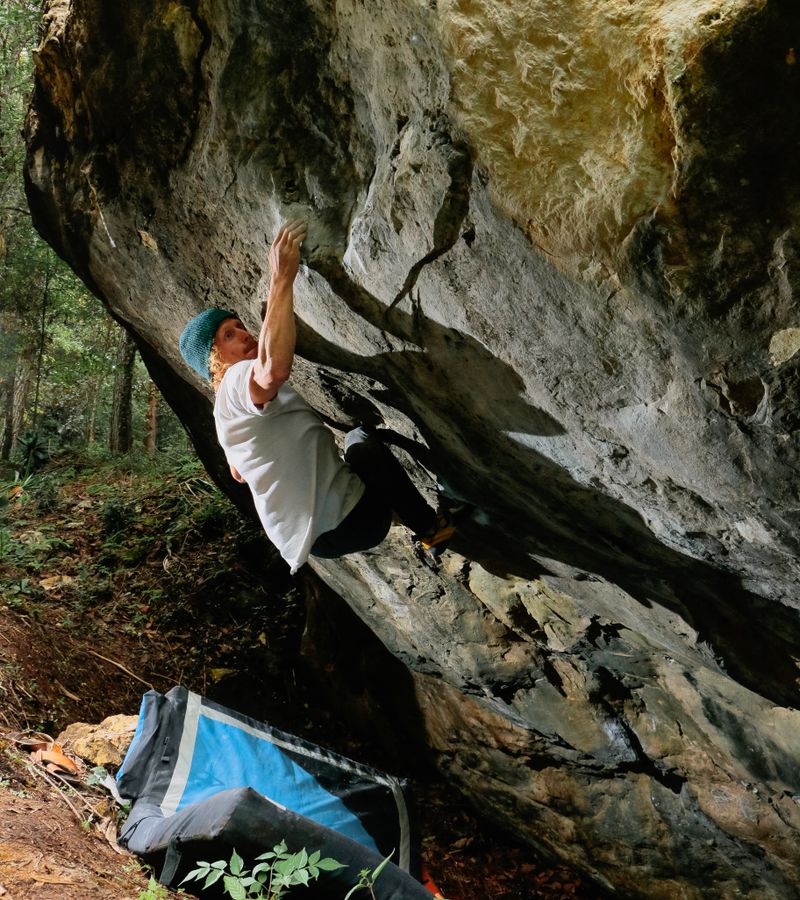
It is a tiny habit and it changes everything on small footholds and steep ground. On an overhang especially, a foot that cuts loose because it was placed carelessly costs you a fistful of energy hauling it back on. Watch it land, weight it, then move your eyes.
Use more of the shoe than the toe
Good footwork is not just the front point. The best climbers use the whole shoe depending on the situation:
- Inside edge for precise, powerful steps and most face climbing.
- Outside edge with a turned hip for reaching past your body without barn-dooring.
- Heel hooks to pull yourself in on steep ground and take weight off the hands.
- The toe scummed or the sole smeared on volumes and slabby blank rock.
Watch how often a strong climber drops a knee or rolls onto an outside edge to bring their hips close to the wall. Hips in means weight over the feet, and weight over the feet means the hands hold less. That single idea — get your weight onto your feet — is behind most of what looks effortless.
Trust the feet you cannot see
On steep terrain you often have to place a foot you can barely see and then commit weight to it before you know it will hold. Less experienced climbers hesitate, the foot peels, and they blame the hold. Experienced climbers place it once, trust it, and move. That trust is built on the slow, quiet practice above. You cannot fake it on the day, but you can train it on every warm-up.
The honest shortcut here is that footwork improves fastest when you stop trying to climb hard and start trying to climb cleanly. Drop a couple of grades, go quiet, watch each foot land, and let your legs carry you. Do that for a few weeks and the harder grades start to feel a lot less like a fight.
Header photo by Pavel Danilyuk
More from the blog
 Mindset & community
Breaking through a climbing plateau
Why progress stalls, and the changes — volume, technique, rest — that get it moving again.
 Mindset & community
Learning from climbing on YouTube
How to use climbing films and channels to learn movement — and watch with a critical eye.
 Mindset & community
What we can learn from how the pros train
The habits elite climbers share — rest, reading, deliberate practice — that any climber can borrow.