Climbing for fitness: what it does for your body
Strength, mobility, problem-solving and stress relief — why climbing is such a complete way to train.

Plenty of people try climbing for the first time expecting a niche bit of fun and walk out realising they have just had one of the best full-body workouts of their lives. The wall has a way of doing that. You are too busy solving the next move to notice you are training, and the next morning your forearms, back and core all let you know exactly how much work they did. As a way to get fit, climbing is unusually complete, and it works on the mind as much as the muscle.
Strength you can actually use
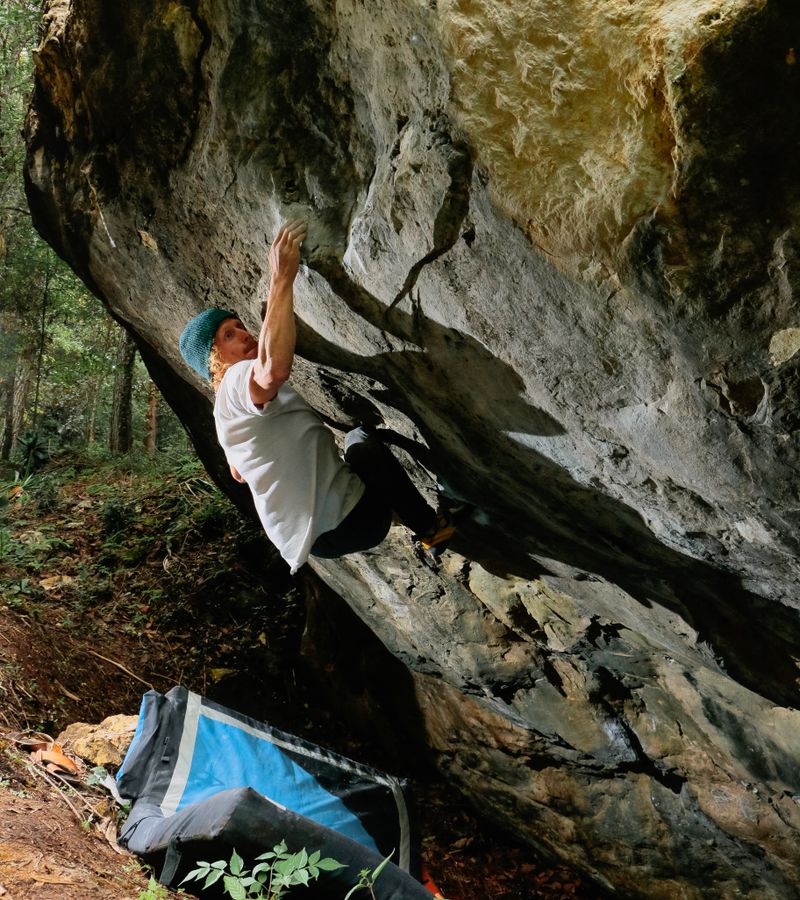
Climbing builds the kind of strength that does something. Pulling yourself up a wall recruits your back, shoulders, arms and grip together, while your core works constantly to keep your hips close to the rock and your feet weighted. It is functional strength, the sort that translates into everyday life, rather than isolated muscle worked one machine at a time.
Grip strength in particular is something most training ignores entirely, and climbing develops it relentlessly. Your forearms and fingers get strong in a way few other activities touch. Over months you notice the difference in obvious places, and in odd ones too, like carrying shopping or opening stubborn jars.
The nice part is that it never feels like lifting weights. The strength is a side effect of trying to get to the top.
Mobility and balance
Reaching for a distant hold, dropping a knee, rocking onto a high foot: climbing constantly pushes your body through a wide range of motion under control. That builds flexibility in the hips and shoulders and a real sense of body awareness. You learn where your limbs are and how to move your weight precisely, which is balance training disguised as play.
Good climbers are rarely the strongest in the room. They are the ones who use their feet well, stay relaxed and move efficiently. Chasing that efficiency teaches your body to work as a coordinated whole rather than muscling everything with the arms, and that carries over into almost any physical activity you do.
A workout for the brain
This is the part people underestimate. Every route is a puzzle, and your job is to solve it with your body while you are on it. You read the holds, plan a sequence, commit, and adjust on the fly when it does not go to plan. That problem-solving demand is genuinely absorbing.
It also means climbing pulls your attention fully into the present. When you are three moves into something hard, there is simply no room left to worry about your inbox. A lot of climbers describe sessions as the only time their head goes quiet, and that mental reset is a big part of why the sport hooks people. The focus it demands is its own kind of stress relief.
The whole package
Pull it together and the appeal is clear:
- Full-body strength, including grip, that translates into real life.
- Better mobility, balance and body awareness.
- A constant mental puzzle that keeps your brain engaged.
- A natural break from everyday stress while you are on the wall.
There is a social layer too. Most climbing happens with other people, swapping beta, cheering on a hard send, sharing a project. That community keeps you coming back far more reliably than any solo gym routine, and showing up consistently is what actually delivers the fitness in the first place.
You do not need to be strong to start. Beginners often climb on feet and technique long before they have any pulling power, and the strength arrives on its own as you keep going. Two sessions a week is enough to feel real changes within a couple of months. If you like watching the progress add up, keeping a simple log of your sessions and the grades you climb turns those slow gains into something you can actually see, which is often the nudge that keeps a new habit alive.
Header photo by Sabrina Wendl
More from the blog
 Mindset & community
Breaking through a climbing plateau
Why progress stalls, and the changes — volume, technique, rest — that get it moving again.
 Mindset & community
Learning from climbing on YouTube
How to use climbing films and channels to learn movement — and watch with a critical eye.
 Mindset & community
What we can learn from how the pros train
The habits elite climbers share — rest, reading, deliberate practice — that any climber can borrow.