Climbing creators worth following
From Olympic champions to YouTubers who teach as they climb — a guide to the people shaping climbing online, and how to learn from them without copying blindly.

Learning from the people who climb online
A lot of modern climbing knowledge arrives through a screen. That is no bad thing — watching strong, thoughtful climbers is one of the fastest ways to improve, as long as you watch actively rather than passively. Below is a tour of the kinds of creators worth your time, with a few well-known names in each. Followings and projects change constantly, so treat this as a starting point and go and find your own favourites.
The athletes who set the standard
At the top of the sport are climbers whose ascents redraw what is possible. Janja Garnbret of Slovenia is widely regarded as the greatest competition climber of her generation, with multiple Olympic gold medals and a long list of World Championship titles. Adam Ondra of the Czech Republic made the first ascent of Silence in 2017, proposed at 9c and still among the hardest routes ever climbed. Alex Honnold reached a wider audience through Free Solo, the film documenting his ropeless ascent of El Capitan's Freerider.
You will not climb like these athletes, and that is not the point. Watch them for movement: how quiet their feet are, how they rest, how little they waste. The lesson is rarely the grade — it is the economy.
The YouTubers who teach as they go
A second group has made climbing approachable for millions. Magnus Midtbø, a former World Cup climber from Norway, runs one of the largest climbing channels on YouTube, mixing training, challenges and collaborations that pull in people who have never touched a wall. Hannah Morris has built a loyal following with bouldering vlogs and coaching that meet ordinary climbers where they are. Emil Abrahamsson is known both for light-hearted adventure videos and for a simple daily hangboard routine that went viral for being gentle enough for almost anyone.
These creators are at their best when they show the process — the failed attempts, the small adjustments — not just the send.
The coaches and the science
If you want to train rather than just watch, channels like Lattice Training dig into the why: how to structure a session, when to rest, how to look after fingers and avoid injury. Evidence-led coaching content has matured hugely, and a single well-made video can save you months of guessing.
How to watch well
Online climbing is inspiring, but it can also nudge you towards moves and training your body is not ready for. A few habits keep it useful:
- Copy technique, not feats. A drop-knee drill helps you. A campus-board session you saw a pro do can hurt you.
- Mind the survivorship bias. You see the send, not the months of work or the injuries behind it.
- Translate, do not imitate. Ask "what is the principle here?" and apply it at your level.
- Be sceptical of miracle fixes. Real progress is boring and consistent.
The best thing about climbing's creators is not the strength on display — it is that the whole sport now teaches in the open. Watch widely, borrow the good habits, and bring them back to your own sessions. Then log what works, so the lessons stick.
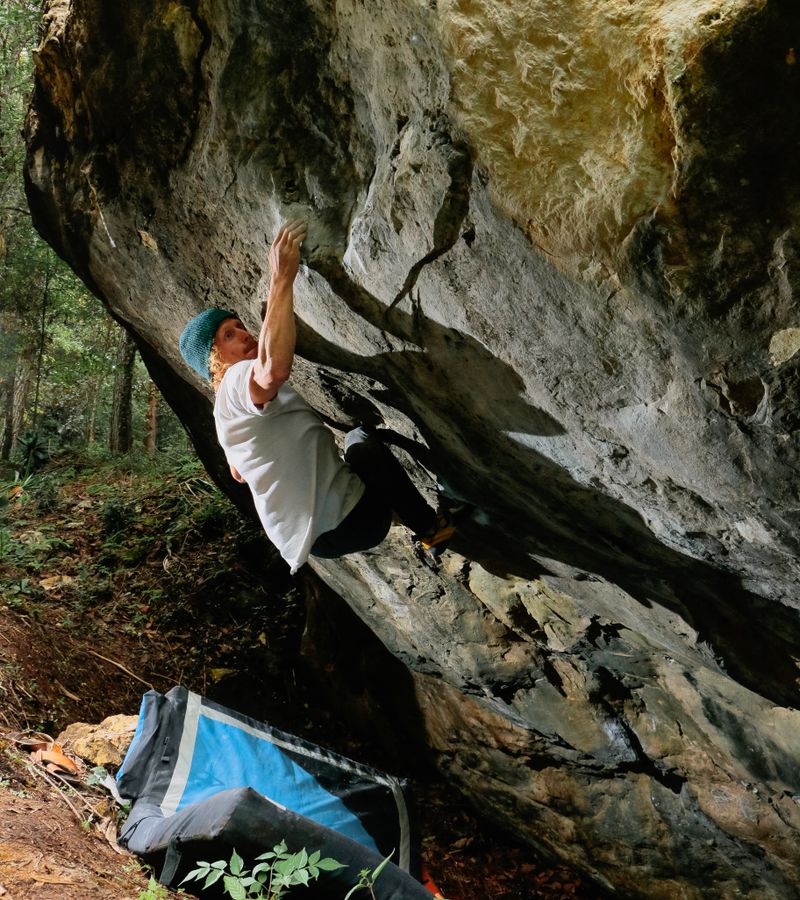
Header photo by Sabrina Wendl
More from the blog
 Mindset & community
Breaking through a climbing plateau
Why progress stalls, and the changes — volume, technique, rest — that get it moving again.
 Mindset & community
Learning from climbing on YouTube
How to use climbing films and channels to learn movement — and watch with a critical eye.
 Mindset & community
What we can learn from how the pros train
The habits elite climbers share — rest, reading, deliberate practice — that any climber can borrow.